Weaving Meanings & Makers from East Timor

September 8th, 2008 jen Posted in Events, Friends of Suai Pt Phillip, News, Tais Traditional Weaving, Traditional Culture East Timor 1 Comment »

Click on the thumbnails to enlarge photos in galleries. Hover your cursor on right or left edge - near the top, to find Next and Back Buttons.


Few people have had the privilege of seeing what are still pretty much “hidden textiles” woven by the women of East Timor at all, not to mention being slipped out of their bright orange protective acrylic bags and rolled off a huge bolster, on to the polished cedar table in the bowels of the old St Kilda Town Hall, as I did last week.

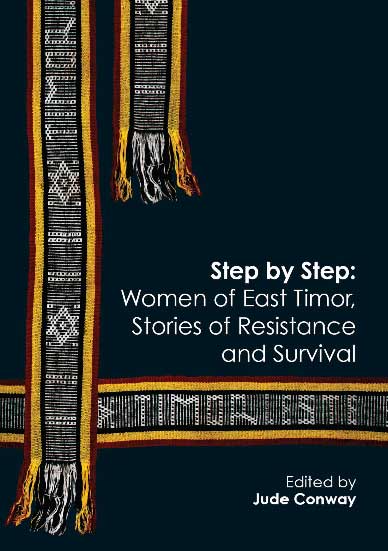
Sara Niner was unrolling the Alola Foundation’s collection of Tais for an exhibition in the new St Kilda Town Hall Gallery. Not many have had the privilege of witnessing the skill and dexterity of these amazing artisans working on the ground in the backstrap looms in East Timor. But, many of those Australians who have, were at the opening of the Exhibition and Forum this weekend. We have seen the beauty and admired the skill but now we were gathering to see a collection from across the country and hear some of the best and most experienced minds apply themselves to questions about the meaning of the tais in Timorese life and what happens when you commercialise a craft grounded in culture and the sacred.


Exploring Meanings, Makers and Markets of Tais - The Speakers
Robyn Maxwell, Curator in the Department of Asian Art at the Australian National Gallery who is the author of ‘Textiles of Southeast Asia - Tradition, Trade and Transformation’ set the scene with an animated and interesting talk that situated the Timorese tradition within the Southeast Asian Region.
Joanna Barrkman who is the Curator, Southeast Asian Art and Material Culture at the Museum and Art Gallery of the Northern Territory, brought us her observations in response to the ancient objects and textiles she is preparing for an exhibition at that Museum in November. Ofelia Neves Napoleao gave us some insights to her experience growing up in East Timor with her Grandmother and Mother who were both weavers. Linda Chalmers - from Oxfam provided a revealing expose on the Oxfam retailing chain’s philosophy and approach to designing and marketing products for the purpose of producing the maximum income for the weavers while respecting their need to preserve their culture. Sara Niner wrapped the morning panel up by updating us about her research into the impact of commercialising tais on the makers lives by telling us about the different models of production and marketing she had unearthed.

The Exhibition
Most of us had seen the difference between tais woven with Timorese cotton and dyes and those woven with imported Indonesian cottons, and the difference is marked. The traditional colours speak of the soil, identity and place and the beautiful photographs by Sally Gray in the exhibition gave us some more insight into the process of tie resistance dying used in the making of futus designs. In contrast the Indonesian commercial cottons range from deep brown and red colours to the very bright watermelon pinks and sunflower yellows, greens and oranges.

When you see futus in today’s world, it’s difficult to imagine how complex the process of making is without seeing it. Difficult because it’s complex, but also because the time taken to produce it from growing the cotton to finished product is pretty unimaginable in the West too. But so is it difficult for us to imagine building a home in barefoot with a machete as our only tool. Timorese culture is alive and well and it has survived as a cutting, carving, tying, knotting, dying, and weaving culture using timber, bamboo, leaves, reeds, coconut fibre, palm fronds and grasses. Not only do they not need power drills they don’t even use a hammer and nails in traditional architecture. These people are actually able to live self sustaining lives eating clean food and drinking clean water in a world where it has become more a fantasy than a possibility.

For those who haven’t seen the tais on a loom, the Alola Foundation provided a beautiful hand carved loom with a lovely work in progress attached. On this, one could see the motif on the warp after dying but prior to weaving. There was just 12 centimetres of warp and weft woven together so we could view the completed pattern. Also hanging in the loom were all the variously shaped timbers and sticks used to weave the colours in and out and ram the warp and weft home.

For those of you who are familiar with tye resist dying and futus from your knowledge of Indonesian textiles and others in the Southeast Asian region much of this is not news. What is revealing to all, in an exhibition such as this though, is the variety of weaving patterns and embroidery styles across just the East Timorese side of the island of Timor which is home to 37 language groups. The diversity in styles and patterns comes not only from the traditions of the language groups but also the influences over centuries of travellers, migrants, colonialism and occupation. Of enormous interest to me was the discovery that the futus woven in Covalima, that are so familiar to me, were found by Linda Chalmers (Oxfam) and a collector, to be very unusual in context of all the other language groups of Eastern and Western Timor as well as the Southeast Asian Region.

Makers & Markets

The work of the makers was well represented in half a dozen stalls in a market run by volunteers selling the tais in their traditional form, as well as others cut and sewn into functional products. Products such as bags, purses and footy club scarves we for sale. St Kilda was a hot seller but there were some grim faces when Hawthorn was found to be unavailable until Christmas!

In this little market run by volunteers with for compassion for the producers, the products for the emerging tourism market for East Timor were on display; serving to remind us of the serious business at hand in the forum, of considering questions of trade, tradition and security for the women, who were laboriously producing them to earn livelihoods for themselves and their families.

Saturday afternoon the issues for these women emerged as we heard of a woman with deep bruises on her hips, etched there by overuse of the loom, as she struggled to produce fast enough to keep up with school fees and other needs of a growing family. We heard of young girls who didn’t want to follow the tradition for a range of reasons, one of which was to prevent injury to their backs.

The Panel
The Panel discussion on Saturday afternoon raised dozens of interesting questions about trade, tradition and security. Among them: cotton growing, health and safety, fair trade practices, producer groups, micro-financing, economic and reading literacy, and the need for dialogue between weavers and those trying to assist them as well as many others.

Some interesting models of weaving groups working successfully in Bali and West Timor were put on the table by guest speakers. Joanna Barrkman outlined the success of the Yaneta Yameta (??) group in Boboke in West Timor which makes traditional high quality work and commercial products. In this case weavers gather together in collectives who weave together. The group maintain the quality by providing the collectives with good quality strong cotton grown locally using sustainable practices. This group has been operating successfully for sixteen years bringing a good income to the people involved because it was linked to a gallery and a market. The other model mentioned is the ‘Threads of Life’ a group based in Ubud in Bali who are successful. Threads of Life was founded by Jean and William Ingram, Pung and Lolet in 1998 in response to the Southeast Asian economic crisis. They run tours, curate exhibitions for their own gallery, conserve and run a shop for the weavers’ products. Both of these groups are said to be successful because of the way the links between the primary producers the market and the preservation and of culture had been set up.

Ego Lemos, is the co-author of a resource book for Permaculture Solutions for Sustainable Lifestyles written for the Timorese context and a community development student at Victoria University. Ego outlined his fears about the destructive power of commercialising what is essentially a cultural practice and said that his organisation would encourage farmers and weavers to grow their cotton in a fence line with other vines. In this way they could still grow large scale quantities without creating a monoculture that required pesticides. Balthasar Kehi emphasised the fact that in the past everybody grew cotton and nobody monopolised it and that the knowledge held among the weavers, who are generally illiterate, should be respected because of the wisdom and knowledge they have in their own culture. Ego pointed out the danger of using chemicals in the growing of the cotton is that it was not only dangerous for growers and weavers but could irritate the skin of weavers, handlers and buyers.

The Panel and workshops that followed on Saturday afternoon made suggestions and recommendations and Sara said she was planning to bring together these with the papers given in the morning session as a resource for friends of East Timor and other interested people.

Together the Exhibition and Forum left me with a the profound understanding that textiles are the art form of Southeast Asia and Timor. The work of making the art and conserving the tradition is important but the role of the work as an artform is by no means the highest role it plays, in fact that is a discursive practice of colonialist cultures that probably has both negative and positive effects.

Yesterday’s forum reiterated for me the necessity of protecting the weavers and their work. I came to appreciate the need to encourage weavers and nurture especially skilled and committed weavers, but more importantly I came to appreciate that weaving as a cultural practice is integral to the Timorese meaning of life. In considering the future of the Tais we need to be looking at the history and traditions in the context of the whole island, working to understand the Tais motif and symbolism as well as the Artisan’s histories.

The exhibition will be open until September 30. Monday to Friday 9.00 a.m. to 5.00 p.m. (Trams3,67 or Train to Balaclava Station turn left and walk down Carlisle street to the Town Hall).

AddThis Social Bookmark Button

Youth Peace Camp held in Kupang

September 8th, 2008 jen Posted in News, Peace Activities, YoMaTre No Comments »

Introduction
Peace - What is the meaning of peace around the world? Where’s the source of peace and who needs the peace? How do people get peace? Peace seems still a word without meaning - but who will give up the meaning of it? In expression of terminology mostly people inclined to pray to heaven, but how do we in practice it in our daily life?

Timor Leste is a post conflict country that lived under violence and torture for many years. The violence continued in 2006 in the independence era. The crisis in 2006 may have been influenced by the former regime, under colonization. It is necessary to fully understand the meaning of living in peace in under independence.

The way to lasting peace is for understanding to arise in the heart of every single person in Timor Leste and in the rest of the world. To start lasting peace it needs to arise from the personal, from the family, from groups and everywhere. Once upon a time I said, I want peace; but personally I haven’t peace in my heart and I was poor at practicing it. This means that there is no peace. We cannot make peace in little bits and pieces while asking for peace, it cannot happen, because peace is not miracle that falls from heaven. Neither can it come from our God that we worship day to day.

Youth Peace Camp
Based on the real situation in Timor Leste and in the world, Covalima Youth Centre is cooperating with The Frontiers from South Korea that has been conducting Youth Peace Camps annually since 2005 until now.

It was held this year from 28th July-22nd August. The program schedule was divided into 2 phases. In the first week representatives of each country conducted workshops to set up programs and activities in Kupang, Indonesia before holding Peace camps from 4th-22 August 2008 and organizing peace camps in the districts.

The Covalima Youth Centre delegated 2 participants - Lin and Anito - to become involved as instructors. Anito returned to Suai with 4 instructors: 1 from Germany, 1 from South Korea, 1 from Japan and 1 from Indonesia, while Lin selected to organize a Peace Camp in West Timor, Indonesia.
The Youth Peace Camp in Timor Leste, was conducted in 3 districts: Covalima District, Lospalos District and Oecusse Dsitrict.

Objective of the peace Camp

ÿ To put peace in the heart of young people to understand fully the value of love and peace.
ÿ To know exactly the meaning of peace and love affecting to our daily life.
ÿ For a number of participants to become pioneers of peace.
There were 60 young people participating in the Youth Peace Camp, divided into 2 groups. One group with about 30 participants, involved children 8-12 years old, and the second group, about 30 participants involved young people 14-17 years old.

The Youth Peace Camp also provided activities for the long holiday period the students in Covalima district had at this time.

Activities
1. Training

Training was provided to young people 14-18 years old. The training included such things as: Defining peace & love; the effect of peace versus loss of peace; Lasting peace; ways to practice peace; peace and conflict. This session involved brain storming, group discussion, story telling, rule play, games and singing. Training was conducted every afternoon for 3 hours.

2. Course.
The Camp provided the opportunity to hold an English course for the participants aged 8-12 years old to learn basic English. Most of the topics from the story books were related to peace; such as stories about a good child in the family, that future dreams are permitted, greeting and respect to the elders.

3. Painting

Painting was provided to the children 8-12 years old. This session allowed the kits to paint people or something else they might consider as an expression of love. It might come from father, mother, brother and sister, friends, animals (their chicken, dog, etc).

AddThis Social Bookmark Button

Computers for Broadband Arrive in Youth Centre in Suai

September 8th, 2008 jen Posted in News 1 Comment »

Excitement is building in Suai as Broadband access inches closer. I received email news on the 29th August that the meeting of the partners involved: Ergilio Vicente of the Youth Media Centre, Emanuel Braz of ICFJ (International Centre for Journalists), Mr Andrew ATA,( Alternative Energy Association) and John Collins FOS (Friends of Suai Pt Phillip), and Simao CC ( the Friends of Suai Community Centre, Suai) about the placement of the satellite and Broadband connections went very well. To show their committment Emanuel delivered 2 new PC’s, 5 chairs, 5 flash discs, UPS, and a whiteboard to the Youth Media Centre.

The next step is for Ergilio to obtain quotes to put more security measures in place and costs of wiring everything up. More news as it comes to hand!

AddThis Social Bookmark Button

9th Anniversary Suai Church Massacre

September 5th, 2008 jen Posted in 1999, Acts of Remembrance, News, Traditional Culture East Timor, Traditional Dance No Comments »

Today and tomorrow mark the Ninth Anniversary of the Suai Church Massacre in which over 50 people were killed in Our Lady of Fatima Church in Suai, while up to 200 are said to have died in the Church grounds and the Unfinished Cathedral.

To mark the anniversary our film the Circle of Stones which is a call for justice for the people of East Timor and particularly Suai, will be uploaded to Suai Media Space.

A call for justice the film intercuts the re-enactment of the massacre with the ceremony around the Circle of Stones that grew outside the Church, that marks the place where the bodies of those killed were burned by the militia afterwards.

AddThis Social Bookmark Button

Pintura sira maka Sergio Halo—Junho 2008

September 1st, 2008 jen Posted in Art of Sergio da Costa, News, Portraits-Tetun No Comments »

31 Julho 2008 Jen posta iha Arte hosi Sergio da Costa, Noticia, Sergio da Costa: Pintura Ho Commentariu Editar

[Nota: clicar ba pintura bodi atu halo “galleria mosu sai, hotu tiha rolar/dada tama ba galleria usa butan ‘Next” ho ‘Back’ maka besik karuk no kwana nian leten]
[Hatudu hanesan demonstrasaun eslaide/pertunjukan slaid]

Pintura sira hosi lawarik nurak (foin sae) sira maka Sergio halo (hare pintura aan duuk sira hosi Sergio da Costa 2000)

Ba naton (quandu) Pat Jessen hakara artista sira halo pintura kona ba Juventudu Suai, hau tau matan ba hau nia belun Sergio da Costa husu nia tulun/ajuda.Pintura ho desenhu sira ba tela/kain kampas kiik sira iha leten nee Sergio nian kontribusaun ba Pat Jessen nian projetu. Projetu nee bodik hadiaa fatin ba juventudu sira iha Suai atu tara hamutu ho pintura rihun ida maka juventudu sira hosi Port Phillip no hosi cidade ida iha Japaun naran Obu bodik arte galeria foun iha liras foun ida hosi St Kilda Town Hall (Prefeitura/Gedung Wali Kota Santa Kilda nian).

Imajen sira maka studente Australiana sira pinta tiha ona kona ba sira aan duuk fo contrapontu foin ida kona ba pintura fotografia sira hosi juventudu maka profiliku (menarik perhatian) kona ba websitu social hosi networking (rede de contatos). Pintura hosi ema oin nee loke luan fatin bodik konsepsu identidade maka mais fluida liu tan hosi autu-retratu fotografia nian.

Hau sei hein permissaun hosi professores arte escola nian bodik atu ‘upload’ (lori hatama ba websitu)galeria hosi studente Port Phillip sira nian pintura.

[Nota: Clicar ba retratu/pintura ida bodik atu halo ‘galleria mosu sai, hotu tiha dada teri ba galleria usa butan ‘Next’ ho ‘Back’ maka besik iha leten hosi sorin karuk no kwana.]

wide-gallery-w.jpgc_up-portraits.jpg

Suai nian Pintura sira iha galleria St Kilda

students-obu-japan.jpg

Pintura sira hosi Obu, Japaun

Pintura sira hosi studente iha cidade Obu iha Japaun incluir iha eksposisaun tan Port Phillip halo belun malu ho cidade Obu. Hau nian razaun bodik incluir pintura sira nee hosi nasaun tolu hamutu tan ita nian nasaun tolu nee ho sira nian istoria hamutu durante Secunda Guerre Mondial (Funu Raiklaran Dala Rua).

Ba naton (quandu) Sergio rona ami iha cidade, nia mai hasoru ami lori pintura bot tebes ida maka nia halo tihan kona ba uma lulik ida hosi Lautem, Los Palos, iha rai loro saen besik—la faek (nai bei) nian ulun besik. Quandu nia hatudu pintura nee ba Pat, imediatemente Pat horan kontente no husu nia halo pintura ida.
Aumenta tan Butan hosi Bookmark (Marcador de paginas]social.

AddThis Social Bookmark Button

Sergio nian comisaun primeiru hosi Port Phillip

September 1st, 2008 jen Posted in Commissions-Tetun, News 1 Comment »

English Version
6 Agostu 2006 Jen postar iha Arte, Arte hosi Sergio da Costa, Comisaun, Noticias 1 Comentario Editar |

‘Bush telegraph’ iha Suai sai hanesan mei (sonu) ida. Hau hanoin ami iha Suai loron ida tiha ona ba oras (quandu) Sergio mosu mai iha Centru Communidade. Nia lori pintura bot ida tebes maka nia pinta kona ba uma lulik Lautem (Los Palos) no maka nia halon/espera atu faan. Pintura nee naruk meter ida no luan centi-meter 75. Ami hakara liu kultura tradisional Covalima. Lautem dook liu iha loro sae hosi Timor Loro Sae, iha “lafaek nian ulun besik’ ou iha ita nia ‘nai bei nian ulun besik’. Uma lulik Lautem dadi tiha ona simbolu Arquitetura Tradisional Timor nian no hau hanoin tan nee Sergio pinta uma lulik Lautem. Pintura nee caru liu no difisil liu atu hetan fatin bodik tara nian iha uma laran tan nia bot tebes. Ferik Desleigh Kent hosi Belun Suai, maka mos iha Suai durante nee, hasai tiha ona foto ida kona ba pintura nee no ba pintura seluk sira maka rai iha pinta bot nee nian ohak.

[Nota: Clicar ba retratu ida bodik halo mosu sai “gallery”, hotu tiha dada tetek gallery usa butan ‘Next’ no ‘Back’ besik iha leten karuk no kwana]

Maibe Mana Pat Jessen horan impresaun (rasa kagum) tebes ba Sergio nian pintura sira. Tan nee Pat fo commisaun ba Sergio atu halu pintura ida kona ba ema katuas ida kaer manu aman hanesan mosu sai iha pintura uma lulik Lautem nee nian oin (latar muka).

Mana Pat Jessen (Coordenadora Belun Suai nian hosi Port Phillip), Simao Barreto (Coordenador Belun Suai nian hosi Suai) halo tradusaun bodik Sergio (latar muka/primeiru planu no nian belun)
Mana Pat halo discusaun kona ba nian comisaun no husu Sergio atu bele halo pintura kiik hira kona ba juventudu Suai bodik demonstrasaun ba loron exposisaun iha St Kilda. Mana Pat mos husu ba Sergio atu fo aula balu kona ba arte nian bodik juventudu seluk sira iha Suai.

Kraik nee: Sergio halo pintura kona ba Mana Pat nian comisaun (Retratu maka membru YoMaTre hasai).

Mana Desleigh horan imnpressaun tebes (merasa sangat terkesan) no tan nee fo komisaun ba Sergio atau halo pintura ida ba nia nain duuk. Nia fo ba Sergio retratu hosi ema feto ferik ida ho feto nurak ida maka nia hasai tihan iha Suai Loro durante semana nee.

AddThis Social Bookmark Button

Arte Muru (Tembok) & Pisasaun iha Suai iha fulan Junho 2008

September 1st, 2008 jen Posted in News 1 Comment »

English version
Loron 5 fulan Agostu 2008 Jen postar iha Arte & Arquitetura, Pisasaun, Pisasaun Suai Junho 2008, Arte Muru Suai Junho 2008 La iha Comentariu Editar |

A maioria hosi arte muru/tembok taka ba muru maka iha mercadu tan iha fatin nee energia hosi cidade Suai mai hamutu sura loron iha semana laran, especialmente ba loron Sabadu. Pintura wain hosi galeria nee Almedia maka pinta. La difisil atu hare Almeida nian influensia no obesesaun maka sai iha nian pintura sira nee. Sei ida teni artista ida naran Melita—Melita ita iha nabe agora?

[Nota: Clicar ba letratu ida ruma nee: letratu sira nee iha ‘gallery’ maka mosu sai nebe ita bele dada sai sira usa butan ‘Next’ ho ‘Back’ iha belan kwana no belan karuk leten].
[Hatudu hanesan exposisaun eslaide]


Pisasaun no arte mura hotu-hotu nee mak ema hakerek ou pinta iha fatin hirak nee hahu durante hau iha Suai iha fulan Fevereiru tinan 2006. Sira hotu nee hanesan lalenok ida maka hatudu krize politiku iha nazaun nee maka terus iha tinan 2006 no tinan 2007. Alfredo Reinaldo nee lider hosi grupu rebelde maka kona akusa crea krize nee, maibe ‘ema kiik sira’ maka hetan frustrasaun hosi lideransa politiku hare nia hanesan eroi bot ida.
[Hatudu hanesan eksposisaun eslaide]
AddThis Social Bookmark Button

Istoria husi Joventude Suai

September 1st, 2008 jen Posted in News 1 Comment »

English version
Partisipantes sira iha workshop ida kona ba istoria digital nian maka hakerek ‘Istoria husi Joventude Suai’. Workshop nee ami halao iha Centru Joventude Suai iha fulan Junho 2008. Objetivu hosi workshop nee bodik atu fo responde ba pedido ida kona ba istoria sira maka simboliza Suai. Istoria sira nee bodik communidade Port Phillip no audensia internacional sira maka visita suaimediaspace. Participantes nain senulu resin ida foin remata sira nian workshop ida maka ami halao iha loron lima laran. Iha workshop nee sira barak maka foin isin dala uluk hasoru computador. Iha workshop nee nia laran ami halo sira halo diskusaun kona ba simbplisme, kona ba audiencia local ho internacional. Ami husu sira hakerek istoria no hasai letratu bodik acompania istoria sira maka iha websitu.

Studente sira nee hotu-hotu otas (idade) hosi tinan senulu resin walu too tinan rua nulu resin. Ba oras (quandu)semana sequnda nian atu hotu ona partisipantes sira neon la hakmatek. Sira neon kiki. Nee tan studente sira espera ‘media workshop’ida maka atu involva video camera no editing software. Tan nee semana terseira ami dedika ba animasaun workshop simples. Iha workshop simples nee studente sira hasai letratu hosi malu no hosi sira nian aan rasi hodi usa telefon portavel no camera digital. Hotu tia sira animar letratu sira nee ba musica iha iMovie. Sira nian resultadu maka dadi ba colesaun video komiku sira.

AddThis Social Bookmark Button

Pintura hosi Yuventudu Suai

August 19th, 2008 jen Posted in Drawings - Tetun, News 1 Comment »

English Language
Primeiro Agusto, 2008, Jen Solok ou Posta iha Arte, Pintura hosi Yuventudu Suai, Jornal la iha komentar —Editar
[Hatudu hanesan demonstrasaun/pertunjukan eslaida]


Pintura hodi lapis no lapis sera por/oleh Domi.

Domi (iha oin) no Almeida ( iha kotuk) ho lawarik seluk sira.

Ba naton (quandu) Pat Jessen hosi Belun Suai, fo sai lia fuan katak material sira bodik arte rai hela iha Centru Communidade Suai bodik ema nurak (foin sae) sira atu usa, lawarik nain hat responde kedas/imediatemente. Domi, Almeida ho sira nain seluk sira (sira naran hau la hatene). Hau hanoin Domi tan nia mai iha Centru Comunidade sura loron. Domi nian pintura sira maka iha galleria leten nee. Hanesan ita bele hare, pintura sira nee balu copia (tiruan), balu mai hosi nian imaginasaun duuk [Hatudu hanesan demonstrasaun eslaide/pertunjukan slaid]

Pintura hodi lapis ho lapis sera por/oleh Almeida

Hau hanoin Almeida tan razaun hira nee. Primeira razaun, Alberto hosi ita nian belun sira iha Suai dehan ba hau katak nian sobrino ida ba iha Japaun tiha ona hanesan nuudar artista ida, no nia menan hadiah/premiu. Primeira razaun maka nee. Ba oras ami husu ba Sergio artista sira naran—artista sira maka ho interesa—nia katak ba ami kona ba Almeida. Hotu tiha nia lori ami ba Almeida nian uma. Ami hare Almeida nian uma hafutar nakonu hodi desenu/gambar no pintura/lukisan. Pintura ida maka hanesan tebes pintura ida maka hau hare tiha ona iha Sergio nian toba fatin no estudiu. Hotu tiha, ba oras grupu ida hosi ofisian media nian bodik atu halo istoria ida kona ba Suai hanesan cidade arte ida, sira mos ba hasoru Almeida. Iha leten nee pintura sira maka nia halo iha Centru Comdeunida

Iha kraik nee koleksaun hosi pintura maka lawarik mane sira (naran la iha) halo.

AddThis Social Bookmark Button

Arte ho Arquitetura

August 19th, 2008 jen Posted in Art & Architecture, News 1 Comment »

English Language

Categoria nee nuudar fatin ida bodik arte maka ami fotografar iha fatin publica no ba forma arquitetura sira maka tulun ami hatene diak liu tan teni.

Arte matriz (seni stensilan) ho pisasaun (grafiti) nee hanesan forma-forma arte maka ema nurak sira iha raiklaran tomak hafolin (valorisar) tebes. Yuventu sira maka dala barak la bele hetan dalan ou fatin bodik halo ema seluk rona sira nia lian hasai sia lian tuir arte matriz no pisasaun.

[Nota: Clicar ba foto ida bodik halo mosu sai ‘gallery’, hotu tiha dada ba gallery nee usa butan ‘Next’ no ‘Back’ besik letin ba sorin karuk no kwana].

Letratu Melancolia nee hau hasai hosi mura ida iha dalan kiik ida iha Suai ba tinan 2000. Literatu nee maka halo hau hasoru ho Sergio da Costa. Letratu nee maka halo hau no Sergio da belun diak too agora. Letratu nee refletir sa maka lawarik feto nurak (foin sai) sira hosi Suai tebe-tebes horan durante tinan nee laran. Nia refletir sa maka iha lawarik feto nurak sira laran tinan nee.

Hau horan katak ekspresaun artistica informa nee maka dinamicamente dadi foun no differente emosionante(halo hau kontente). Tan sa ida? Primeiru, tan sira nee ephemera (la kaleur). Segunda, tan paisaun (keinginan kuat/horan makaas) maka ema nurak ida ba iha dalan atu hatudu nia aan arsticomente la hanoin atu hetan osan. Dala barak obra de arte (karya kesenian) nee refletir resistancia ou sa maka subar aan iha vizinhansa (uma kain seluk),ou dala barak obra de arte nee hanesan expresaun hosi espiritu artisticu ou hanesan marka ida kona ba identidade. Obra de arte hanesan nee dala wain katak sai ba ita simbolicamente ita nia moris, ita nia experiensia duuk.

Iha arte publica Suai nian hau hasoru liberdade maka dala barak la malorek iha obra ba tela our papel. Hau hanoin ita bele dehan katak hanesan ba Port Phillip. Hare video ‘Art of Healing’ (Dur: 7 minutes).

Domi & nia Belun iha Sergio nian arte Mura 2000 & Sergio nia Uma 2000

Iha Suai artista sira pinta la hos deit ba mura iha fatin publica maibe mos ba mura hosi sira nian uma hela fatik duuk. Nee sa ida maka unica tebe-tebes iha Suai. Lawarik mane oan ida maka lori hau dala isin primeru ba iha Sergio nia uma hela fatin in fulan Julho 2000. Hau hakfodak no haksolok ba oras hare mura oin luan nian hakonu ho pinta tipo Disney nian hamutu ho pintura feto nurak ida maka sexy tebes. Hau hasoru lawarik mane kiik nee ba tempo hau fotografar orbe de arte ida maka ikus fali hau hatene katak Sergio maka pinta. Lawarik mane kiik oan nee nia naran Domi. Hau hanoin nia nee Domi maka pinta iha aula arte iha Suai hodi material sira mai hosi Port Phillip.

Iha Sergio nian toba batin/studio, mura sira hafutar (decoradar) hotu hodi Sergio nia pintura. Hau hanoin nee la dun hakfodak quandu ema considera katak material sira nee folin caru no difisil atu hetan iha Suai. Maibe pintura sira nee refletir valor hosi artista nia familia. Tan sa ida permitir ita nia oan sira decorar (hafutar) ita nia uma hodi sira nia arte? Funsaun importante seluk ida hosi ‘arte ba uma’ maka nee: ema estrangeiru sira hakara mai visita uma sira nee maka uma hosi artista sira. Visita hosi ema estrangeiru sira nee bele crea posibilidade kona ba ajuda hosi, kona ba vendas ou encomandas hosi ema estrangeiru sira.

AddThis Social Bookmark Button