Orlando Hoar Berek Boavida Martins & the tais of Kamenassa

November 9th, 2008 jen Posted in News, Suai Tais, Tais Weaving, Tais of Kamenassa, Traditional Culture 6 Comments »

When Pat Jessen of the Friends of Suai went shopping to buy tais for the market stall to be set up for the Tais Forum held in St Kilda in early September Annie Sloman introduced her to the family of Chamot who has contributed so much poetry to Suai Media Space recently.

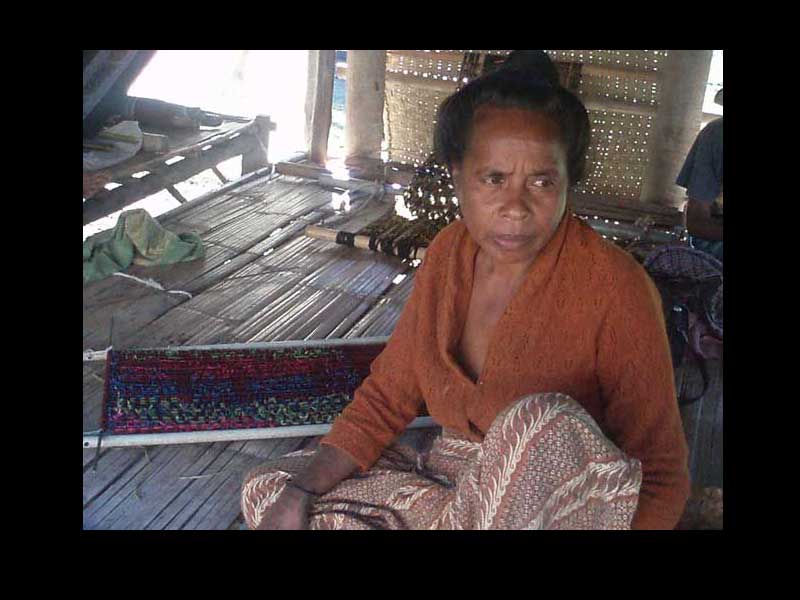
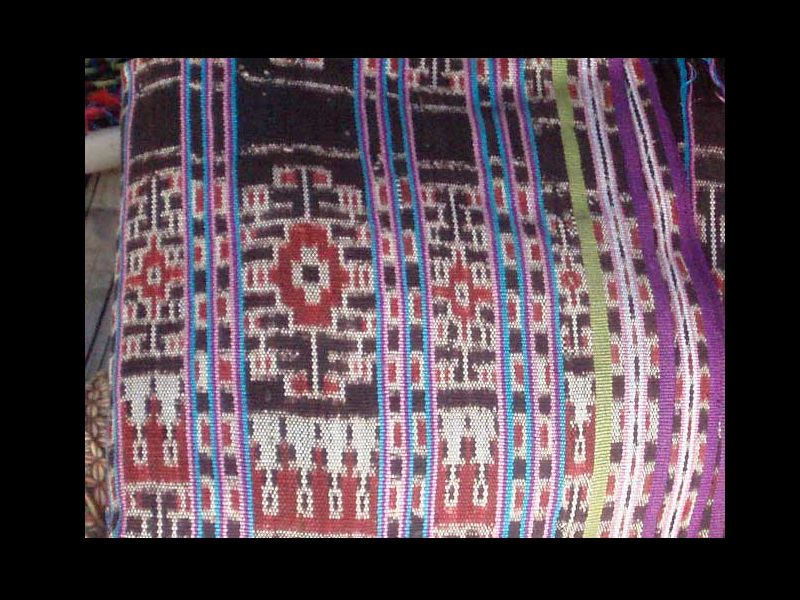
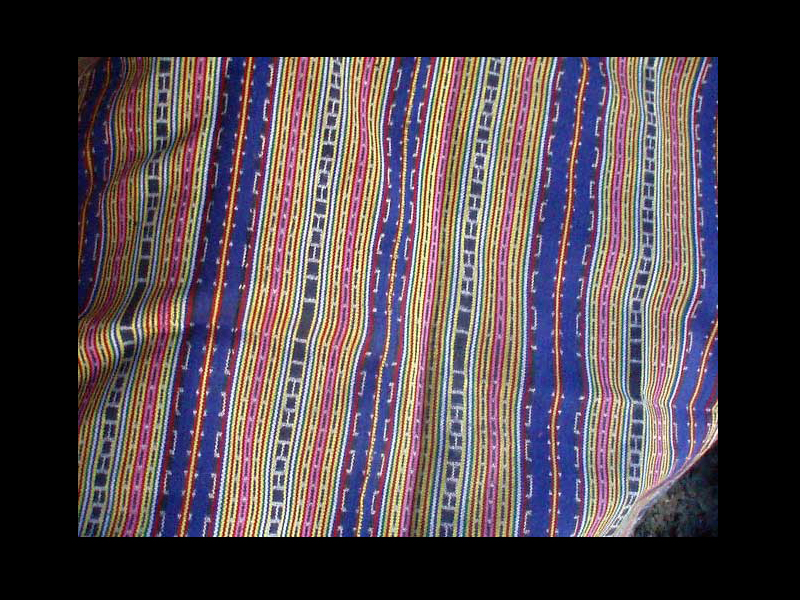
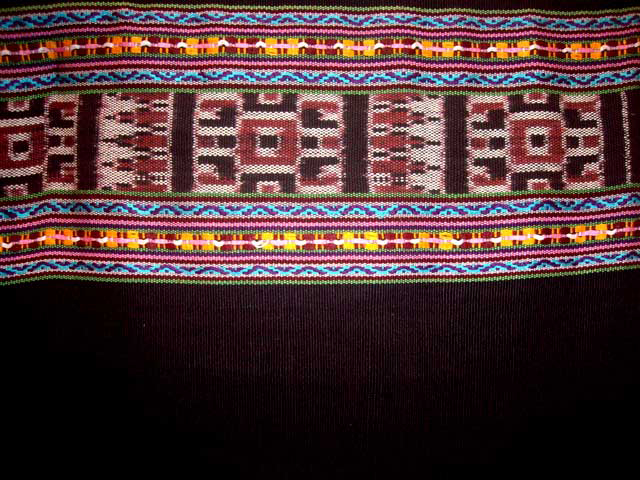
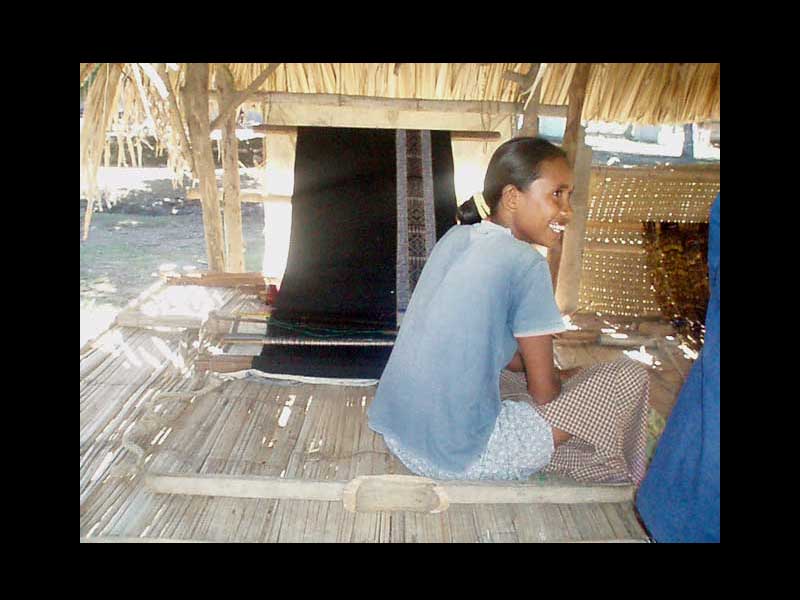
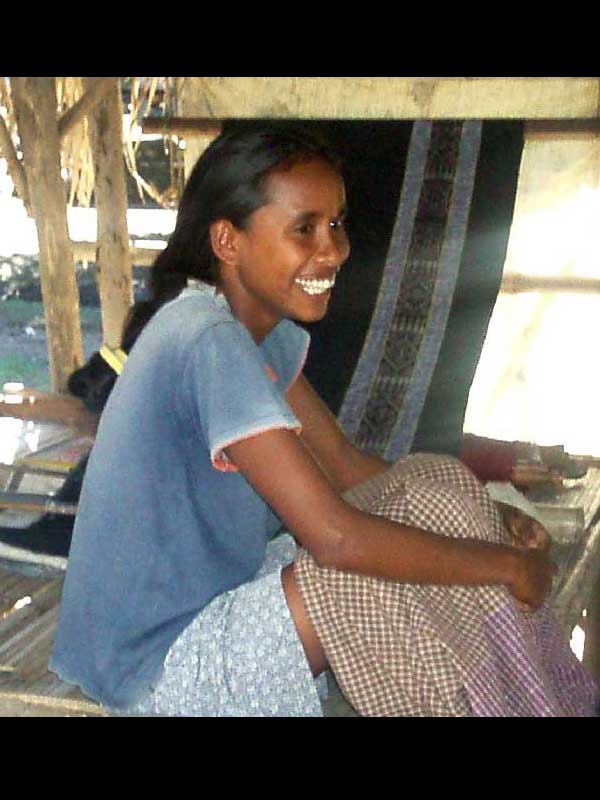
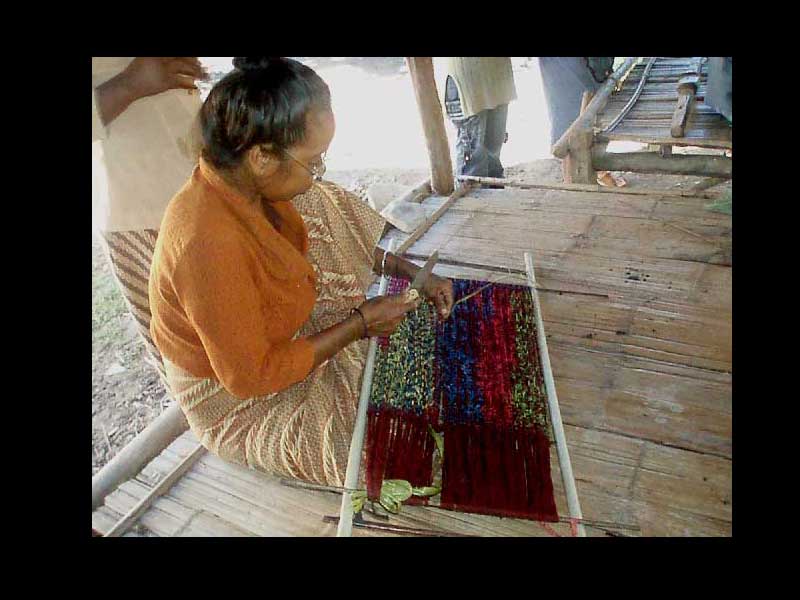
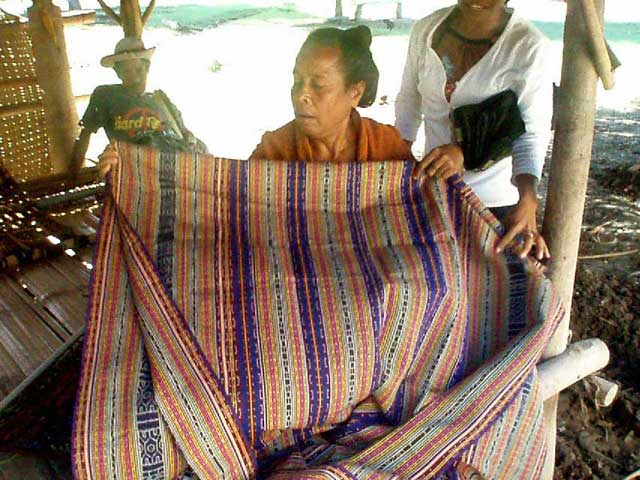
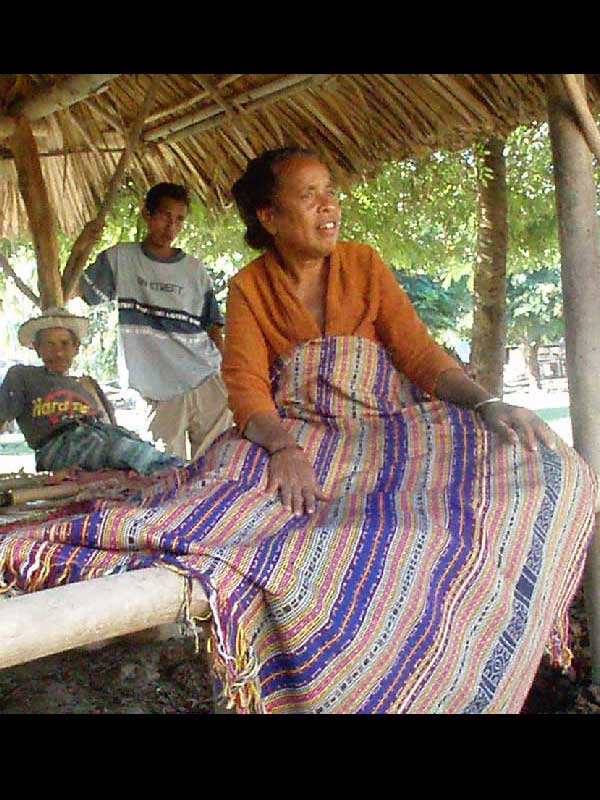
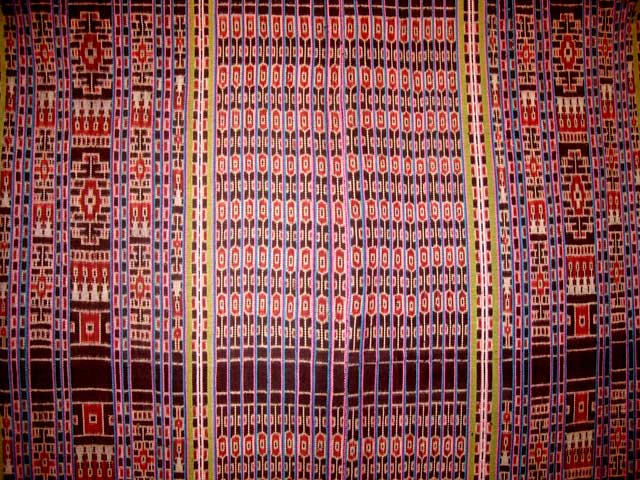
The tais mane (male tais) woven by Orlando Martins originally bought for the market stall at the St Kilda Forum (Weaving: Meanings, Makers & Markets of East Timor), became an outstanding contribution to the Exhibition alongside another feto tais (female tais) from Kamenassa.   We are unsure who wove the female tais, but our photographs show Inveolata (Chamot’s sister ‘In’) weaving a very similar one during the time we were there.

The tais that Pat bought have been donated to the Alola Foundation Collection and I thought it was time to publish the photographs of Orlando and Inveolata, their family and friends in situ in Kamenassa where they live and work as a way of presenting just two of the makers whose work was represented in the Forum Exhibition. Over the next few days I will also be putting up a soundscape and some video footage of weavers in situ on Suai Loro Road in 2000. There is a lot more story to tell about the role of the tais in the recovery of East Timor through our stories of Suai and video footage shot in June this year will contribute to the story next year.

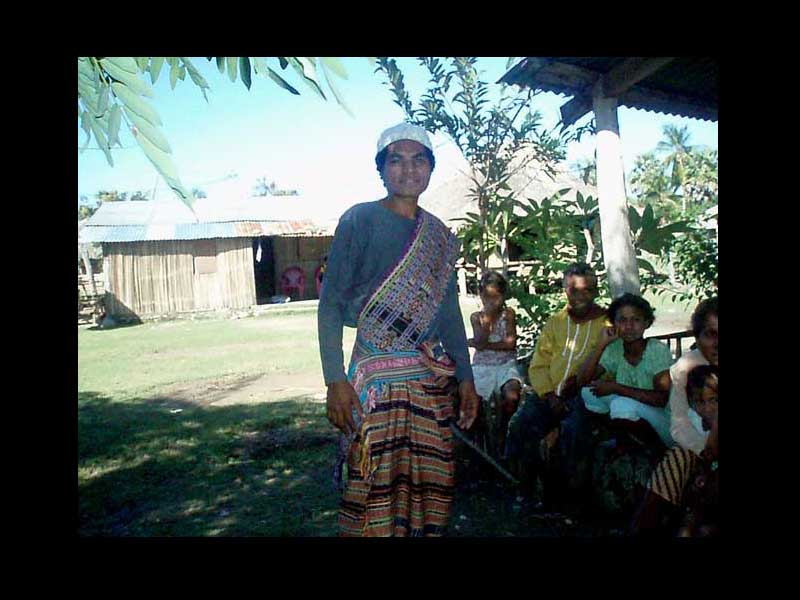
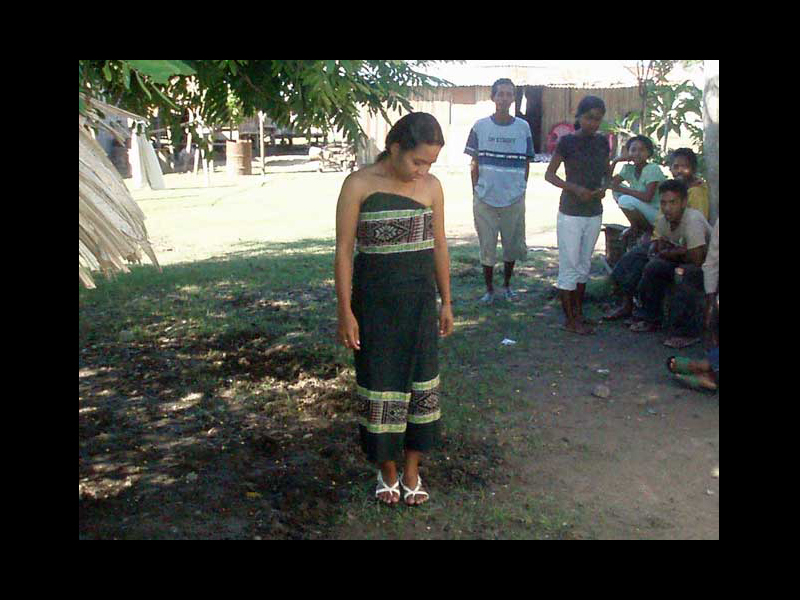
The photographs in this story were taken by the Suai Media Space/Friends of Suai/YoMaTre workshop in Suai at the Youth Centre in June this year while they were preparing their story about the tais of Covalima.  Two of the workshop students ( Densi and Jem) are shown in our photographs modelling the tais.

Densi is related to Orlando  I think but Jem ( who we nicknamed Che, because of his hat) is from a different village. Also included are photographs Densi and Che had taken of them when asked to take a photograph that used symbolism to express an aspect of their identity. I have included these because although Densi (who is a weaver herself) was enthusiastic about modelling her tais Jem was embarrassed at first, shying away from this kind of display. But when you see how they represented themselves in their own stories, it throws a different light on the who these young people are beyond their traditional background.

In her own representation of herself Densi is standing in front of the District Administration offices in her suit (which she probably had to put on especially for the photograph), while Jem is standing very stylishly next to an Indonesian monument that declares Suai is an ‘Art City’.

I couldn’t resist publishing the photographs of the little girl I noticed playing with a little traditional shelter  she had made from sticks with her friend who escaped the photographer’s frame, and the little girl carrying rice in a woven reed basket as she walked across the green behind an older girl (who also escaped the frame). One of the student teams was doing a project on traditional housing and another on traditional food, so the photographs were taken for their benefit.  I have include them here, where they were taken, because they show so beautifully how traditional cultural practices are being passed on to the kids in the rural areas.

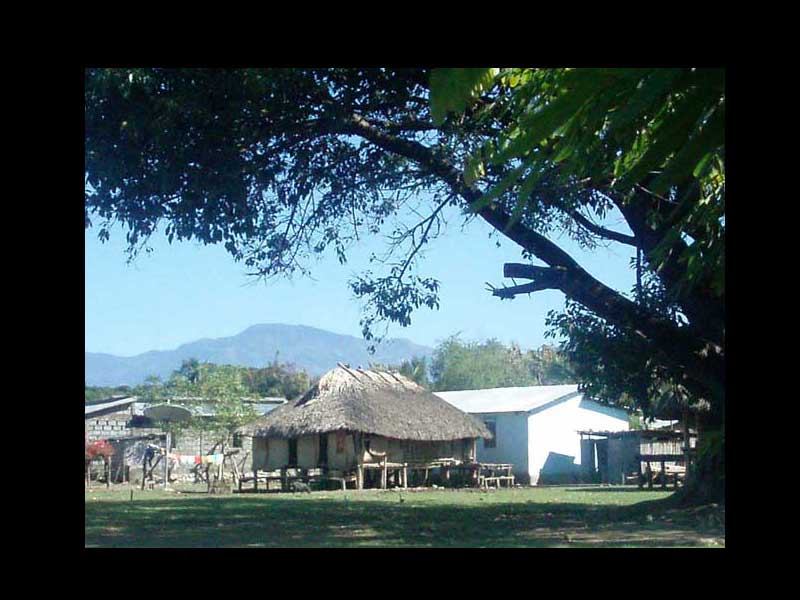
Two  photographs also show the traditional housing style of the area and how woven screens are used to add privacy to verandahs. If you look closely in this one you can see the Mosquito net strung up on the verandah and news items and photographs pinned up on the woven screen next to it. Other housing is a mixture of traditional and contemporary with cement floors and besser brick walls some with corrugated iron roofing others still preferring to use the traditional grass roofing. We finished our photo shoot that day enjoying the traditional hospitality of Chamot’s family on the verandah of their house with a delicious Caffe Timor.

Pat has ordered another tais from Orlando who has promised in June that it will be ready in a year or so. We look forward to showing this one on Suai Media Space in the future.

AddThis Social Bookmark Button

Suai-Covalima’s Tais

July 28th, 2008 jen Posted in Suai Tais, Tais Weaving, Tradition Art & Identity Suai, Traditional Culture, YoMaTre 1 Comment »

‘Stories from the Youth of Suai’- Suai-Covalima’s Tais was written by
Ajay, Densi & Ameu who were made up one of the collaborative groups in the YoMaTre Digital Stories workshop held in Suai in June 20008. (Densi and the women in her family are weavers from Kamenassa near Suai.)

Tetun Version: Tais Suai Covalima
The Suai-Covalima’s tais are very beautiful since they have a variety of types and colours. The Suai-Covalima’s tais look most beautiful when they are worn during the ceremonies especially by women for dancing.

“The models of tais Covalima”, “Cotton tree”, “Cotton wool”, Cristalina Moniz, Residential Address: Fatuk Laran. Occupation: spinning traditional cotton wool”.

The process of turning cotton wool into threads takes a long time. Because of that only very few people who still make tais from the traditional—locally grown—cotton, while many women make tais from imported modern threads, that is, threads from Indonesia.

Traditional Threads
The making of traditional threads required the following materials:

A special shape of wood—beautifully crafted from solid wood for spinning.
A small bowel—traditionally either made form wood or mud for spinning.

Process of making traditional threads
1. It takes at least one month to spin the cotton
2. Boiling and drying cotton take one week
3. Rolling the cotton takes four days
4. Making design on the thread (turning into futus) takes two months
Modern thread
The process of making tais from modern threads is faster. Therefore more women prefer to make tais from modern threads. It is faster to roll, to dye and design.


“Modern threads (threads made in Indonesia)”, “Tais designed with flowers”, “Tais designed with names.”

Process of making tais from modern threads:
1. Rolling the threads
2. Dyeing the threads
3. Designing the threads (turning it into futus)
4. Colouring the threads by way of boiling them with colourful modern liquids).

Tais Designs
Tais can be designed with flowers, with names of people or places. There are diverse designs.

“welcoming the visit from the government”, “sitting together”, “preparation to welcome guests.”
The Role of the Tais in Timorese life
1. For wearing during the traditional ceremonies
2. For covering the dead bodies (the dead bodies are covered with layers and layers of tais, the quality and quantity of tais depend on the social status of the dead person)
3. For gift exchanges
4. For bride prize
5. For welcoming the visit of the government or the head of the Church, and for welcoming the statue of the Blessed Mother Mary (usually during the procession months for the Blessed Mother Mary, May and October.

SUMMARY:
The traditional threads still exist, but nowadays not so many women use traditional threads for making tais. More and more women use modern threads. This is simply because modern threads do not need a long process for making tais.

AddThis Social Bookmark Button

Tais Suai Covalima

June 20th, 2008 lin Posted in News, Suai Tais, Suai Tais - Tetun, Tais Weaving, Tradition Art & Identity Suai, Traditional Culture, YoMaTre 1 Comment »

Hakerek Grupu 8 Istoria Digital Workshop by Ajay, Densi ho Ameu. Densi ho famili halo tais ba Kamenassa Suai besik.

English Version - Tais Suai Covalima

Tais suai Covalima, tais nebe furak no kapas tamba, nia modelo oin-oin no nia kor mos kapas. iha sira nia isin lolon, bain hira sira hatais hodi halo sermonia.

“ Modelu Tais covalima”“Kabas hun”“Kabas rahun” Cristalina Moniz; Hela fatin: Fatuk Laran Servisu: Halo tiris, kabas tradisional.”

Sasan atu hodi halo Kabas Tradisional iha maibe nia prosesu han tempu.ida
ne’e ema balu halo Kabas Tradisional, balu lahalo. tamba, nia prosesu ne’e kleur.
Ne,e mak ema barak uja kabas moderno, ne’e nia prosesu la-lais. .(benang buatan Indonesia).

Kabas Tradisional
Halo Kabas tradisional persija material:
- Tiris kabas hodi ai.
- Mankok ki’ik.

Prosesu Kabas Tradisional:
1. Halo tiris nia han tempu fulan 1
2. Tein no habai’I kabas han tempu semana 1
3. Hurun kabas han tempu loron 4
4. Tiha atu kesi sai ba futus fulan 2

Kabas Moderno:
Kabas moderno nia prosesu lais, ne,e mak ema
barak liu hakarak uja kabas moderno.
tamba, lalais hurun,tiha,kesi ba futus mos lais.

“Kabas moderno (benang buatan Indonesia)”“Tais futus ho aifunan” “Tais futus ho naran”

Prosesu Kabas Moderno:
1. Hurun kabas.
2. Tiha kabas.
3. Kesi kabas sai ba futus.
4. Tein kabas hodi aiwen. sai ba kor oin-oin.

Modelu Tais:
Tais beleh halo ba gambar aifunan,
beleh halo ba ema nia naran, ho
modelu oin-oin.

“simu visitasaun hosi governo”“tu’ur hamutuk”“preparasaun atu simu ema”

Fungsi Tais:
1. Hodi halo sermonia adat.
2. Hodi falun ema mate.
3. Hodi troka perenda.
4. Hanesan mak visitasaun hosi governo, ho nossa senhora.

Sumario:
Kabas tradisional sei iha nafatin mai be to’o agora ema ladun uja kabas tradisional, ema barak uja kabas moderno. Tamba, nia prosesu lalais.

AddThis Social Bookmark Button